

Helical Piles for Deep Foundations: The Smart Solution for Poor Soil Conditions in Utah and Wyoming

Updated: Dec 9, 2025
When you’re ready to build a new home, an addition, or a commercial structure and you discover the soil isn’t cooperating, loose sand, clay-heavy layers, or a high water table, it can feel like your foundation strategy just hit a major obstacle. You might assume you’ll need expensive soil replacement or deep excavation before construction can even begin. That’s where helical piles for deep foundations come in.
At GoliathTech Utah, our engineered deep foundation solutions for poor soil help contractors stabilize projects quickly and affordably—without the need for soil replacement. Helical piles are designed to penetrate down to load-bearing strata, and provide lasting support in unstable terrain, giving builders peace of mind and helping projects stay on schedule.
In this article, you’ll learn how helical piles work with deep foundations, why they’re ideal for poor soil conditions, and how Utah and Wyoming contractors can use them to build stronger, more reliable foundation solutions.
Here’s what we’ll cover:
What Are Helical Piles (and Why They Matter in Deep Foundations)
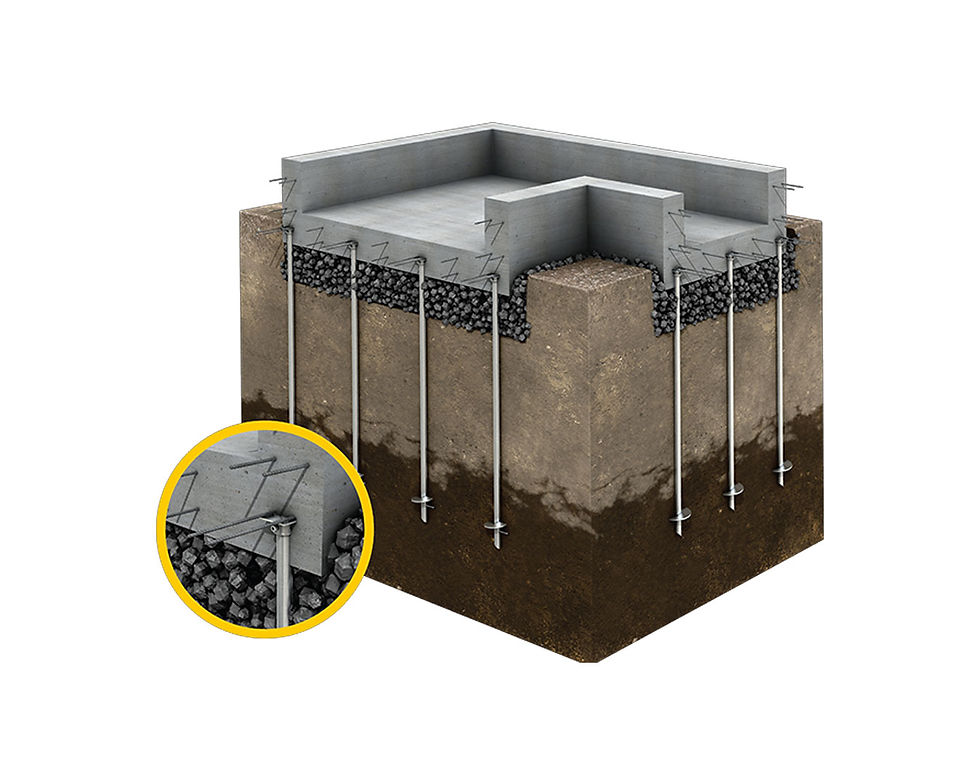
Helical piles, also known as helical piers or screw piles, are steel shafts fitted with one or more helix-shaped plates. As they’re rotated into the ground, those plates act like threads on a screw, anchoring deep into stable soil layers.
Unlike traditional footings that rely on shallow soil strength, helical piles for deep foundations transfer the load to competent soil, even in sites with loose sand, clay, or water-saturated ground.
For contractors in Utah and Wyoming, where soil types vary dramatically from sandy basins to clay-rich foothills, this flexibility makes helical piles a go-to solution. You can build confidently without costly soil remediation or waiting weeks for concrete to cure.
Watch our video explaining how deep foundations solve problems that difficult soil conditions cause.
Why Choose Deep Foundation Solutions for Poor Soil
Soils are rarely perfect. When surface layers can’t handle load-bearing requirements—whether due to moisture, density, or instability—deep foundation systems are essential. They bypass weak soils to transfer weight into stable ground.
Common poor soil conditions in Utah and Wyoming include:
Sandy soils that shift and compact under weight.
Clay-heavy soils that expand and contract with moisture, leading to cracking and movement.
High water tables, which can undermine traditional concrete footings.
Using helical pile foundations eliminates the need for major soil removal. Instead, the piles screw into stable layers, distributing the load evenly and creating a solid base for homes, additions, or commercial structures.
At GoliathTech Utah, we emphasize that “challenging soil conditions don’t have to derail your project.” Our helical piles for deep foundations ensure structural integrity even in the toughest environments.
How Helical Piles Work: The Process and Performance
Step-by-Step Installation Process
Soil Evaluation: A geotechnical or structural engineer analyzes the site to determine soil type and required load capacity.
Pile Design: Based on soil data, the right pile size, helix diameter, and number of plates are selected.
Installation: A hydraulic drive motor rotates each pile into the ground until reaching target depth and torque—indicating sufficient bearing capacity.
Load Connection: Once installed, piles are immediately ready for structural load—no waiting for curing or drying.
This process minimizes disruption—no vibration, minimal excavation, and very little spoil. That’s why contractors across Utah and Wyoming prefer this system for helical piers in high water table areas or sites with tight access.
Key Advantages for Builders
Immediate Load Capacity: Build right after installation.
Minimal Site Disturbance: No large excavations or concrete curing delays.
Flexibility: Works in sandy, clay, or saturated soils.
Lower Costs: Reduces the need for heavy machinery and soil replacement.
Reliable Engineering: Designed to penetrate to load-bearing strata.
These benefits make helical piles for deep foundations one of the most efficient solutions available for unstable terrain.
Why Contractors Rely on Helical Piles
GoliathTech Utah has seen firsthand how deep foundation solutions for poor soil transform challenging projects into success stories. Here’s why general contractors and builders continue to choose this system:
Engineered Strength: Each helical pile is designed to reach stable load-bearing layers, ensuring long-term performance.
No Soil Replacement Required: Avoid the cost and hassle of excavation and importing engineered fill.
Supports Heavy Structures: From new homes to large commercial projects, helical piles deliver superior load-bearing capacity.
Ideal for High Water Table Sites: Helical piers in high water table environments perform where concrete fails—no waiting for ground to dry.
For builders working throughout the Wasatch Front, these systems mean confidence in every project. Whether you’re building on sandy soil near Utah Lake or clay-heavy ground in Ogden, helical piles for deep foundations deliver unmatched stability.
Helical Piles vs. Concrete Foundation Options
Foundation Type | Ideal Soil Conditions | Advantages | Limitations |
Traditional Footings | Stable, dry soils | Low cost, simple | Not suitable for poor or saturated soils |
Drilled Shafts / Driven Piles | Deep, heavy-load applications | High load capacity | High cost, large machinery, long timeline |
Helical Piles | Weak, sandy, or clay-heavy soils; high water table | Fast, clean, cost-effective; immediate load-bearing | Requires engineering design and torque verification |
For many Utah and Wyoming construction projects using helical piles vs. concrete foundations, helical piles strike the perfect balance—affordable, fast, and reliable in unpredictable terrain.
Applications for Helical Piles in Utah Construction
Contractors use helical pile foundations for a range of residential and commercial projects, including:
New home construction in sandy or high-water-table areas.
Home additions where existing soil strength can’t support extra weight.
Commercial buildings requiring heavy load support.
Retaining walls, decks, and walkways in soft or unstable soils.
Remedial work for settling foundations.
Because installation is quick and clean, it’s also ideal for tight-access urban sites or projects where excavation is limited.
Best Practices When Using Helical Piles for Deep Foundations
Start with a Geotechnical Report – Understand the site’s soil profile and water table depth.
Design to Load Requirements – Choose shaft diameter, helix size, and number of plates based on structure type.
Monitor Torque During Installation – Ensures piles reach adequate depth and load capacity.
Plan for Corrosion Protection – Galvanized steel resists corrosion, crucial for wet or clay-heavy soils.
Tie Properly to Structure – Use certified brackets or caps to ensure load transfer.
Document and Test – Load testing validates the pile performance for engineering records.
Following these steps ensures your helical pile foundation performs flawlessly for decades.
Cost and Time Advantages of Helical Piles
While initial materials may cost slightly more than shallow footings, helical piles often reduce total project costs due to speed and reduced site work. You save on:
Excavation and soil hauling
Concrete curing delays
Heavy equipment mobilization
Weather-related downtime
Contractors report completing installations in a single day, keeping projects on schedule even during Utah’s unpredictable weather.
Local Relevance: Utah & Wymoing's Unique Soil Challenges
Utah and Wyoming soil conditions vary significantly—silty clays along the Wasatch Front, sandy soils in southern regions, and high water tables in valley basins. These all challenge traditional concrete foundations.
Helical piles for deep foundations adapt perfectly to these conditions. They perform consistently in environments where footing failures, shifting, or cracking would otherwise occur. For this reason, more home builders in Utah and Woming as well as general contractors are turning to helical pile technology to future-proof their builds.
FAQs: Helical Piles for Deep Foundations
Q1: When should I consider helical piles instead of concrete footings?
A1: Use helical piles when the soil is loose, clay-heavy, or water-saturated. They’re ideal for sites where shallow foundations can’t provide stable load-bearing.
Q2: How deep do helical piles go?
A2: Depth varies based on soil conditions, typically 10–30 feet. The installer monitors torque to ensure piles reach the load-bearing strata.
Q3: Are helical piles good for high water table areas?
A3: Yes. Helical piers for high water table soils are a perfect match because they don’t require curing or large excavations that risk flooding.
Q4: Can helical piles support commercial structures?
A4: Absolutely. Helical piles can be engineered for heavy-duty loads, making them suitable for both residential and commercial applications.
Q5: How do helical piles compare in cost to concrete foundations?
A5: In poor soils, helical piles are often more affordable than deep drilled shafts or soil replacement due to faster installation and less equipment.
Q6: How long do helical piles last?
A6: With proper galvanization and installation, helical pile foundations can last 75+ years depending on soil conditions.
Q7: Do helical piles require maintenance?
A7: Minimal maintenance is needed. Once installed and protected from corrosion, helical piles remain stable for the life of the structure.
Conclusion: Building Confidence from the Ground Up
For Utah contractors and home builders, soil shouldn’t be a reason to delay or overcomplicate your project. With helical piles for deep foundations, you can stabilize new homes, additions, and commercial structures faster, cleaner, and with greater reliability than ever before.
GoliathTech Utah specializes in helical pile foundations engineered for challenging soil—from sandy sites to clay-heavy and high-water-table locations. If you’re facing unpredictable ground conditions, reach out to see how our deep foundation solutions for poor soil can keep your project moving forward—on time, on budget, and built to last.


Comments